
This Doctor Does Not Exist: Checking Health Advice Online
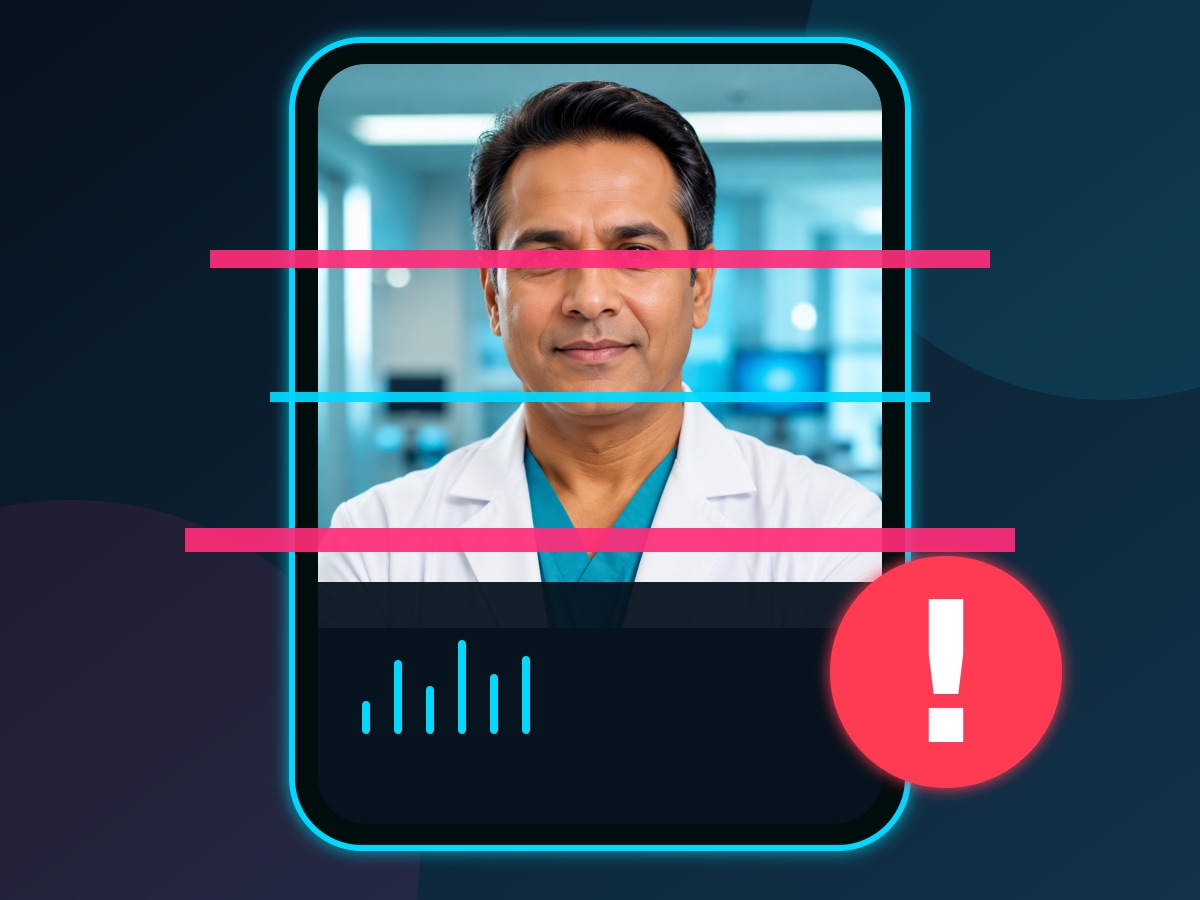
The person in the white coat looks directly into the camera. They speak confidently, use medical language and appear to be recording from a clinic.
There is only one problem.
The doctor does not exist.
Artificial intelligence can now create convincing presenters, realistic voices and polished health videos quickly and cheaply. Some content is clearly labelled and used responsibly. Other videos borrow the appearance of medical authority while promoting unsupported claims, miracle cures or products.
For viewers, the challenge is no longer simply deciding whether a video looks professional. Professional-looking content can now be created without a professional being involved at all.
How widespread is AI-generated health content?
In July 2026, UK digital marketing agency Hallam published an analysis of 1,198 leading TikTok videos across 25 search terms involving health, money, education, careers and public information.
Across all categories, 235 videos showed signs of AI generation or assistance. Health was the most AI-heavy category in the analysis, with signs of AI involvement in 40% of the health-related results examined.
For the specific search term “health tips”, 42 of the first 50 videos showed signs of AI generation or assistance. “Fitness” was reported at 44%, “doctor advice” at 28%, “nutrition tips” at 24% and “mental health tips” at 18%.
The research also found that AI-generated or AI-assisted videos were shared slightly more often on average than the non-AI videos in its wider sample.
These figures should be interpreted carefully. This was an agency analysis, not a peer-reviewed clinical prevalence study, and it examined selected search terms rather than every health video on TikTok. TikTok disputed that the findings accurately represented its platform and stated that it removes harmful health misinformation and invests in AI labelling and literacy.
Even with those limitations, the analysis highlights an important problem: viewers can encounter apparently authoritative health information without knowing who created it, whether it was checked or whether anyone qualified stands behind it.
AI does not automatically mean false
It is important not to replace one simplistic assumption with another.
AI can be used to make accurate educational content, improve accessibility, translate information or help a qualified professional communicate more clearly. A human presenter can also share inaccurate or misleading advice.
The real issue is not simply whether AI was used. It is whether the information has a trustworthy and accountable source.
Trying to identify AI by looking for strange blinking, distorted hands or unnatural speech will become less reliable as the technology improves. Source checking remains useful even when the video looks completely convincing.
Three questions to ask before trusting a health video
- Who made it?
Is the creator clearly named? Do they give a relevant professional qualification, registration or genuine organisational affiliation?
A white coat, a confident voice or the word “doctor” in a username is not proof. If the creator claims to be a healthcare professional, check whether the identity and credentials can be verified independently.
- Where is the evidence?
Does the video identify a recognised guideline, research source or clinically reviewed information? Can the claim be found outside that one account?
Be cautious when confidence replaces evidence, particularly if the message relies on phrases such as “one simple cure”, “doctors do not want you to know” or “this changes everything”.
- Can it be verified through a trusted source?
For important health decisions, compare the claim with information from sources such as the NHS, NICE, UKHSA, recognised charities or an appropriate healthcare professional.
Social media can introduce a useful question. It should not be the sole basis for diagnosing symptoms, changing prescribed medicines, beginning an unverified treatment or delaying necessary medical care.
Warning signs that should make us pause
A video deserves additional scrutiny when it:
- promises a rapid or miraculous result;
- gives no named, accountable source;
- provides no evidence that can be checked;
- uses fear, conspiracy or urgency to discourage questions;
- says one remedy works for everyone;
- encourages people to stop prescribed treatment;
- is selling the product it claims will solve the problem;
- asks viewers to move quickly to a private message, unregulated website or payment page.
None of these automatically proves that every statement is false. They are reasons to stop, investigate and avoid sharing the claim as fact.
Why this matters in health and social care
Health misinformation does not remain online. It can influence real decisions about medicines, nutrition, symptoms, supplements, treatment and care practice.
A service user may arrive worried by a frightening claim. A relative may request that prescribed treatment is changed. A staff member may repeat a viral “tip” to colleagues because the presenter appeared knowledgeable.
Responding dismissively can damage trust. A better approach is to acknowledge the concern, identify the precise claim and help the person check it through a reliable source. Concerns involving medication, new symptoms or treatment should be directed to an appropriate healthcare professional in line with the person’s care plan and local policy.
Care organisations should also consider digital health literacy within staff development. Being able to locate, question and verify information is increasingly part of safe practice.
Pause. Check. Then share.
Before forwarding a persuasive health video, take a moment to ask who made it, where the evidence comes from and whether the information can be verified.
The person presenting the advice may not exist. The consequences of acting upon it can still be very real.
Safe Skills Training
Safe Skills Training helps care teams develop the observation, reasoning and communication skills needed to make safer, evidence-informed decisions.
To discuss training for your organisation, visit:
https://www.safeskillstraining.com
SOURCES
Hallam: 1 in 5 top TikTok videos in life-impacting industries are now AI-generated
https://hallam.agency/blog/1-in-5-top-tiktok-videos-in-life-impacting-industries-are-now-ai-generated/
The Guardian: Misleading AI-generated doctors pose huge danger to public safety
https://www.theguardian.com/technology/2026/jul/27/misleading-ai-generated-doctors-public-safety-danger-tiktok
Healthwatch England: AI and algorithms in healthcare
https://www.healthwatch.co.uk/blog/2025-11-05/ai-and-algorithms-healthcare-what-are-risks-and-opportunities-nhs