
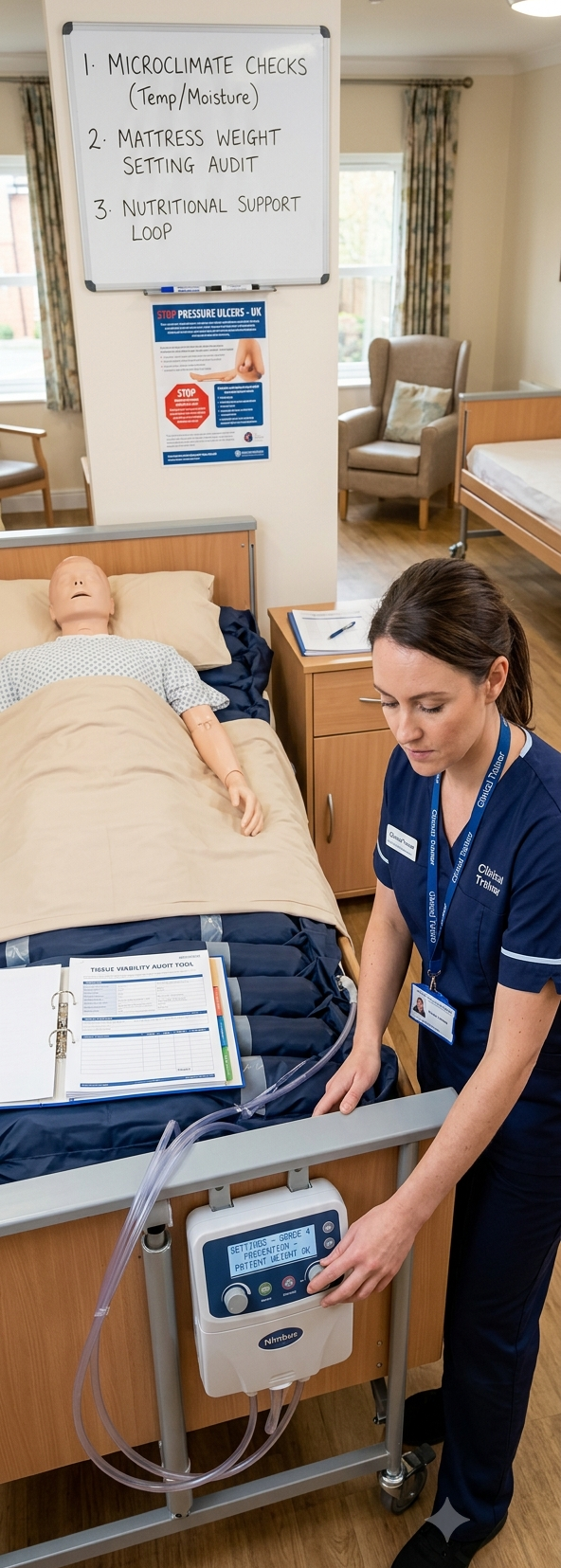
The Hidden Enemy: Microclimate Management
The microclimate refers to the local temperature and moisture levels at the interface between the resident’s skin and the support surface. When a resident sits or lies on an inappropriate dynamic mattress or cushion, heat builds up, causing localized sweating.
Moisture macerates the skin, drastically reducing its tensile strength. When you combine macerated skin with even a tiny amount of friction or shear (such as a resident sliding slightly down in bed), the deep tissue layers detach from the blood supply. This initiates a deep tissue injury that tracks upward, appearing on the surface as a sudden, full-thickness Grade 3 or 4 ulcer.
Beyond the Turning Chart:
Upskilling Your Floor Staff
Waterlow or Braden scores are only useful if the team on the floor understands how to translate those numbers into immediate environmental and clinical adjustments. Dynamic governance demands that nurses and senior carers are trained to:
Optimize Mattress Settings: Routinely auditing that dynamic mattress weight settings actually match the resident’s current weight.
Identify Shear Risks: Correcting poor repositioning techniques that drag tissue rather than lifting it.
Enact Early Escalation: Recognizing non-blanching erythema (Grade 1) as an absolute clinical emergency before it breaks the skin barrier.
Advanced Strategies for Preventing Grade 3 & 4 Pressure Ulcers
For nursing home managers, a single acquired Grade 3 or 4 pressure ulcer is more than a serious clinical failure—it is an automatic safeguarding trigger and a major red flag for CQC inspectors. Yet, despite meticulous paperwork and strict turning regimes, deep tissue injuries still occur. Why? Because basic repositioning protocols only address half the problem.
To truly eliminate avoidable severe pressure damage, clinical educators must train staff to look beyond the surface and manage the complex physiological factors that drive tissue breakdown: microclimate, shear, and metabolic demand.
Nutritional Healing and Metabolic Demand
Skin integrity cannot be maintained if the body is in a negative nitrogen balance. When a complex care resident faces acute illness, cognitive decline, or poor oral intake, their metabolic demand increases. Without aggressive nutritional interventions—specifically targeted proteins, amino acids, and micronutrients like Zinc and Vitamin C—the body will sacrifice peripheral skin tissue to protect core organs. Turning a malnourished resident every two hours will not prevent skin failure if the cellular building blocks for tissue repair are entirely missing.
Having staff adequately skilled and trained in identifying risk and planning prevention is essential.
By shifting your team’s focus from a compliance-driven "box-ticking" turning culture to an active, holistic tissue viability framework, you safeguard your residents from debilitating pain and protect your facility's regulatory standing.