
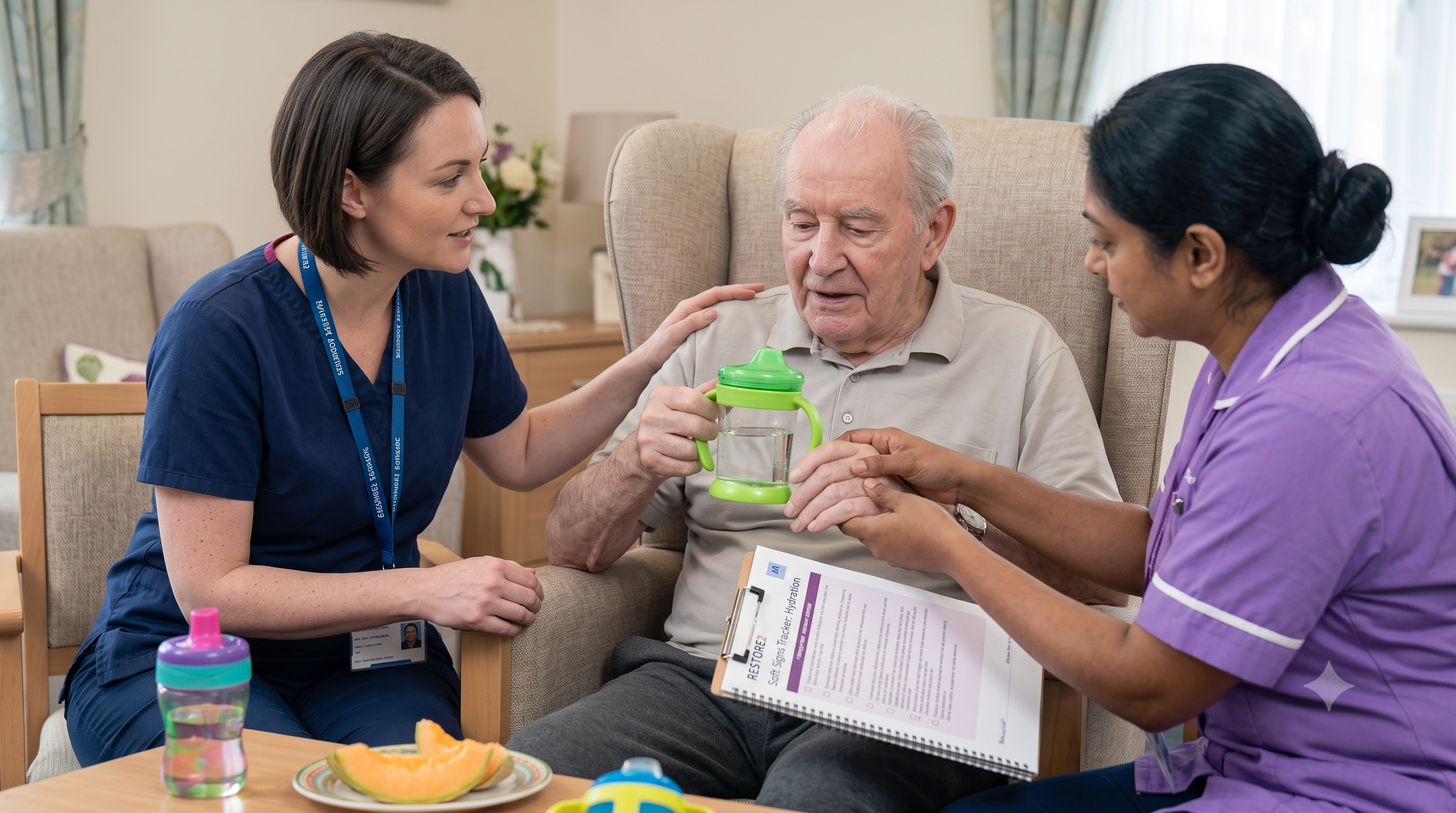
Beyond the Fluid Chart: Advanced Dehydration Screening, RESTORE2, and NEWS2 Escalation
In adult social care, fluid balance charts are universally used, yet they are notoriously difficult to maintain accurately. For registered managers, a stack of incomplete fluid logs is a major compliance liability during a CQC inspection. However, the greater clinical danger lies in treating fluid tracking as a purely administrative task rather than an active diagnostic window.
In residents living with dementia or age-related loss of thirst perception (hypodipsia), dehydration develops insidiously. By the time a resident exhibits overt signs like dry mucous membranes or sunken eyes, they are already in a state of significant physiological stress—placing them at immediate risk of Acute Kidney Injury (AKI), severe delirium, secondary falls, and constipation.
The Failure of "Retrospective Logging" A standard fluid target (e.g., 1,500ml daily) is useless if staff only tally the numbers at the end of a shift. If a night team discovers at 10:00 PM that a resident has only taken 400ml all day, attempting to "catch up" is clinically unsafe and often impossible.
To protect residents, care teams must be trained to recognize the "soft signs" of deterioration built into frameworks like RESTORE2. Non-clinical care staff are often the first to sense that a resident is "not quite right", and RESTORE2 provides the formal clinical bridge to convert those intuitive observations into actionable steps:
- RESTORE2 Soft Signs of Fluid Loss: A sudden, subtle drop in baseline energy, new-onset lethargy, increased agitation, or a slight shift in alertness that deviates from their normal dementia presentation.
- Orthostatic Instability & "Off Legs": Unsteadiness upon standing or sudden gait changes caused by reduced circulating blood volume (hypovolemia).
- Excretory Indicators: Concentrated, low-volume urine output paired with a drop in voiding frequency.
Integrating RESTORE2 with NEWS2 Dehydration is a primary catalyst for physical decline. Training senior carers to pair RESTORE2 soft-signs screening with physiological observations via the National Early Warning Score (NEWS2) transforms daily practice.
Consider this, alongside the fact that hospital staff will immediately escalate to safeguarding any admission from social care where the admitting doctor has listed 'dehydration' as one of the reasons for their admission.
When a carer identifies a RESTORE2 soft sign alongside a new NEWS2 score rise (such as mild tachycardia, a drop in blood pressure, or a slight temperature elevation), staff can immediately enact structured interventions:
- Targeted Fluid Rounds: Offering small, high-frequency "fluid shots" or high-water-content foods rather than large, intimidating glasses of water.
- Structured SBARD Escalation: Using the SBARD communication module within RESTORE2 to present precise clinical data (soft signs + NEWS2 metrics + 24-hour intake logs) to primary care or 111.
- Care Plan Adaptations: Updating individual hydration plans to reflect changing personal preferences and time-of-day hydration patterns.
Upskilling for Watertight Governance Moving your workforce from passive "box-ticking" on fluid charts to active dehydration triage using RESTORE2 and NEWS2 elevates your clinical governance. When your team can demonstrate to CQC inspectors that fluid tracking directly informs dynamic care delivery and early escalation, you don't just secure a strong regulatory rating—you actively prevent emergency hospital admissions and keep your residents safe and well.