
Beyond the Dashboard: Designing Clinical Audit Cycles That Drive CQC Compliance
Registered Managers often tell me that their biggest fear during a CQC inspection isn't a lack of policy, but an inability to prove that their clinical governance is working. You can have the most robust procedures on paper, but if you cannot demonstrate an active, closed-loop audit cycle, you are essentially flying blind.
With the CQC’s increasing focus on outcome-based evidence, the "tick-box" culture of auditing—where forms are signed off just to fill a folder—is no longer acceptable. Inspectors are looking for proof that your audits lead to tangible service improvement.
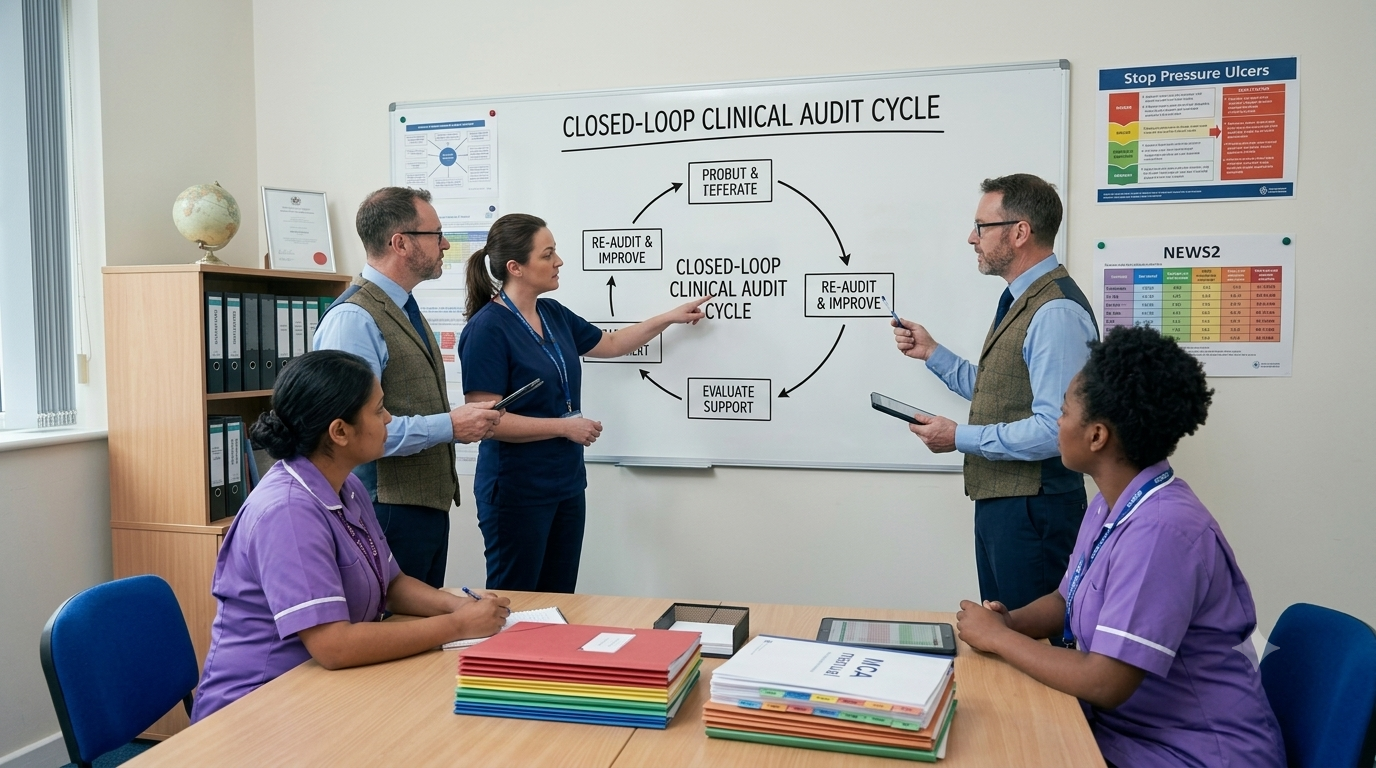
The Closed-Loop Audit Framework A truly defensible clinical audit cycle isn’t just about collecting data; it’s about what you do with it. To protect your registration, your senior team must be trained to implement a "Closed-Loop" cycle:
- Identify the Clinical Priority: Don't audit everything. Focus your governance time on your highest-risk areas (e.g., medication errors, pressure ulcer acquisition, or DoLS backlog status).
- Establish Baseline Compliance: What is actually happening on the floor at 3:00 AM? Your audit must be a true reflection of daily practice, not a "best-case scenario" report.
- Implement Targeted Change: If an audit shows a gap, what is the specific intervention? This could be a staff briefing, a change in equipment, or a targeted workshop.
- Re-Audit to Measure Impact: This is the step most managers miss. You must re-audit the same metric 4–6 weeks later to prove that your intervention actually improved the outcome.
Upskilling the Governance Team The bottleneck in most homes is that auditing is treated as a solitary task for the Manager. This is a missed opportunity for leadership development. By training your Unit Leads and Clinical Supervisors to conduct their own peer-to-peer audits, you achieve two goals: you increase the frequency of your data collection, and you foster a culture of shared accountability.
When your senior carers and nurses understand why they are auditing—and how it links directly to resident safety and CQC Regulation 17 (Good Governance)—they stop seeing it as an administrative burden and start seeing it as a clinical tool for quality improvement.
Conclusion: Moving from Reactive to Proactive The hallmark of an "Outstanding" home is a clinical team that identifies a problem, fixes it, and proves the fix worked—all before an inspector ever walks through the door. If your current governance consists of gathering data without a clear cycle of improvement, you are leaving your home vulnerable. Investing in audit training isn't just about passing an inspection; it’s about creating a sustainable culture of clinical excellence that protects your residents and empowers your staff to do their best work every day.